
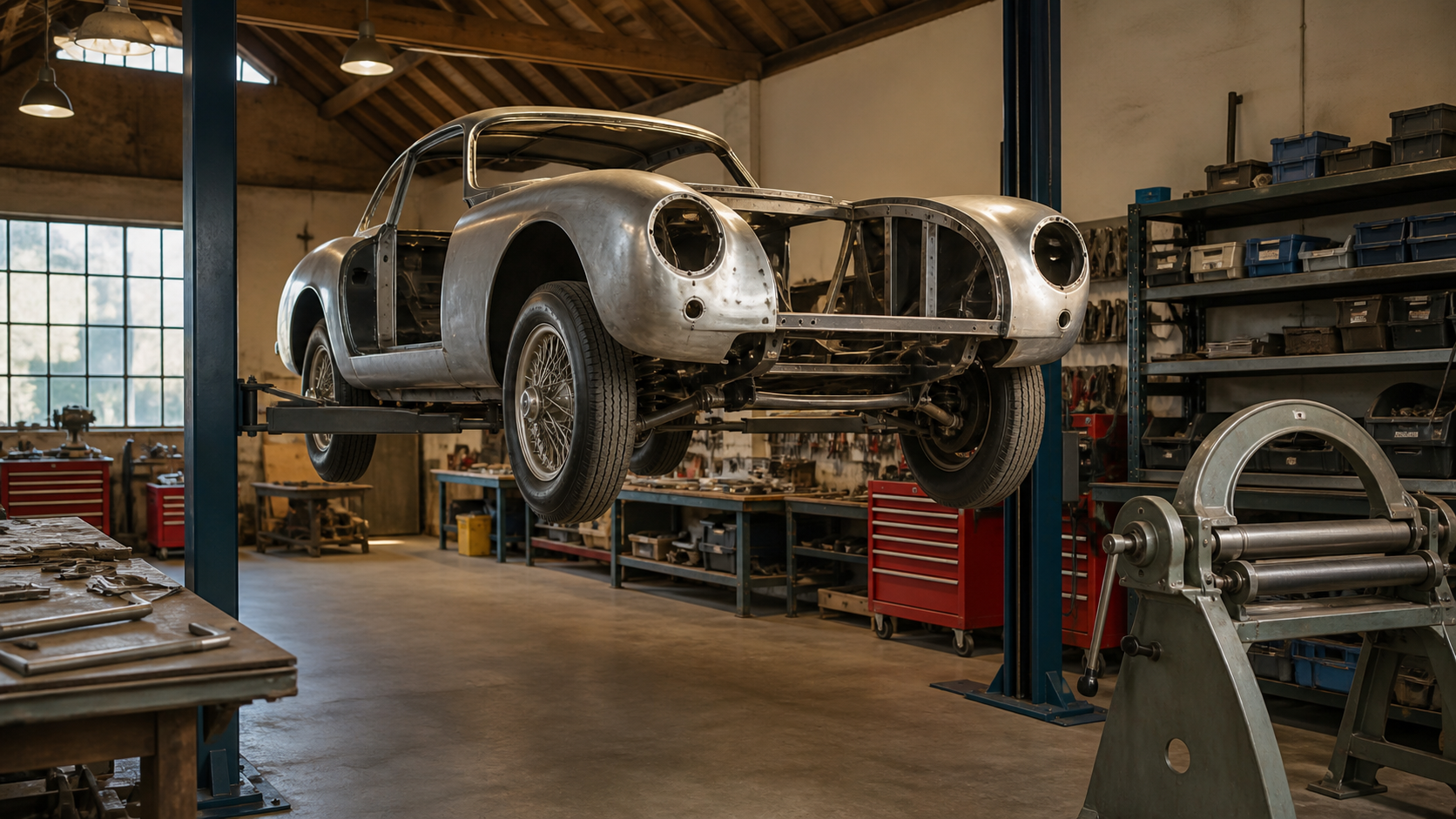
Operating a classic car restoration shop requires a unique blend of historical knowledge, mechanical expertise, and metalworking skill. For many owners, the daily focus remains entirely on tracking down rare parts, managing complex build schedules, and ensuring the final finish on a vintage automobile meets rigorous standards. However, managing the business operations behind the scenes requires an equally structured approach, especially when an owner begins considering the long-term future of the enterprise. Preparing a restoration shop for eventual transition involves more than organizing the workshop; it requires building a defensible record of operations, assets, and financials.
A defensible valuation record serves as a detailed, transparent account of the business’s current standing. This documentation allows external reviewers to assess the shop’s infrastructure, ongoing projects, and financial health accurately. Because restoration shops operate with highly specialized equipment and manage multi-year projects, standard financial statements often fail to tell the complete story. Owners should proactively structure their records to clarify exactly what the business owns, what work is in progress, and how standard operating procedures dictate daily workflow.
Cataloging Specialized Equipment and Tooling
The foundation of a classic car restoration shop often rests on its specialized equipment. Unlike standard collision repair centers, restoration shops require tooling designed for custom fabrication, vintage diagnostics, and specialized paint application. A defensible record must clearly catalog these assets, providing reviewers with a comprehensive understanding of the shop’s operational capacity.
Owners should maintain an itemized inventory of all major equipment, including English wheels, custom jigs, frame straighteners, specialized welders, and environmentally controlled paint booths. This inventory ought to document the purchase date, original cost, maintenance history, and current condition of each item. For instance, if the shop utilizes specific climate-control systems for long-term vehicle storage—similar to the considerations outlined in winter antique car care tips—these systems should be recorded alongside standard shop tools.
Furthermore, it is critical to distinguish between personal tools and business assets. In many owner-operated shops, the founder may have accumulated a vast personal collection of hand tools and diagnostic equipment over decades of work. If these tools will not remain with the business upon a transition, they must be explicitly excluded from the shop’s asset inventory. Clear documentation of what equipment belongs to the business entity helps reviewers assess the true operational readiness of the shop without relying on assumptions regarding tool ownership.
Defining and Documenting Work-in-Progress (WIP)
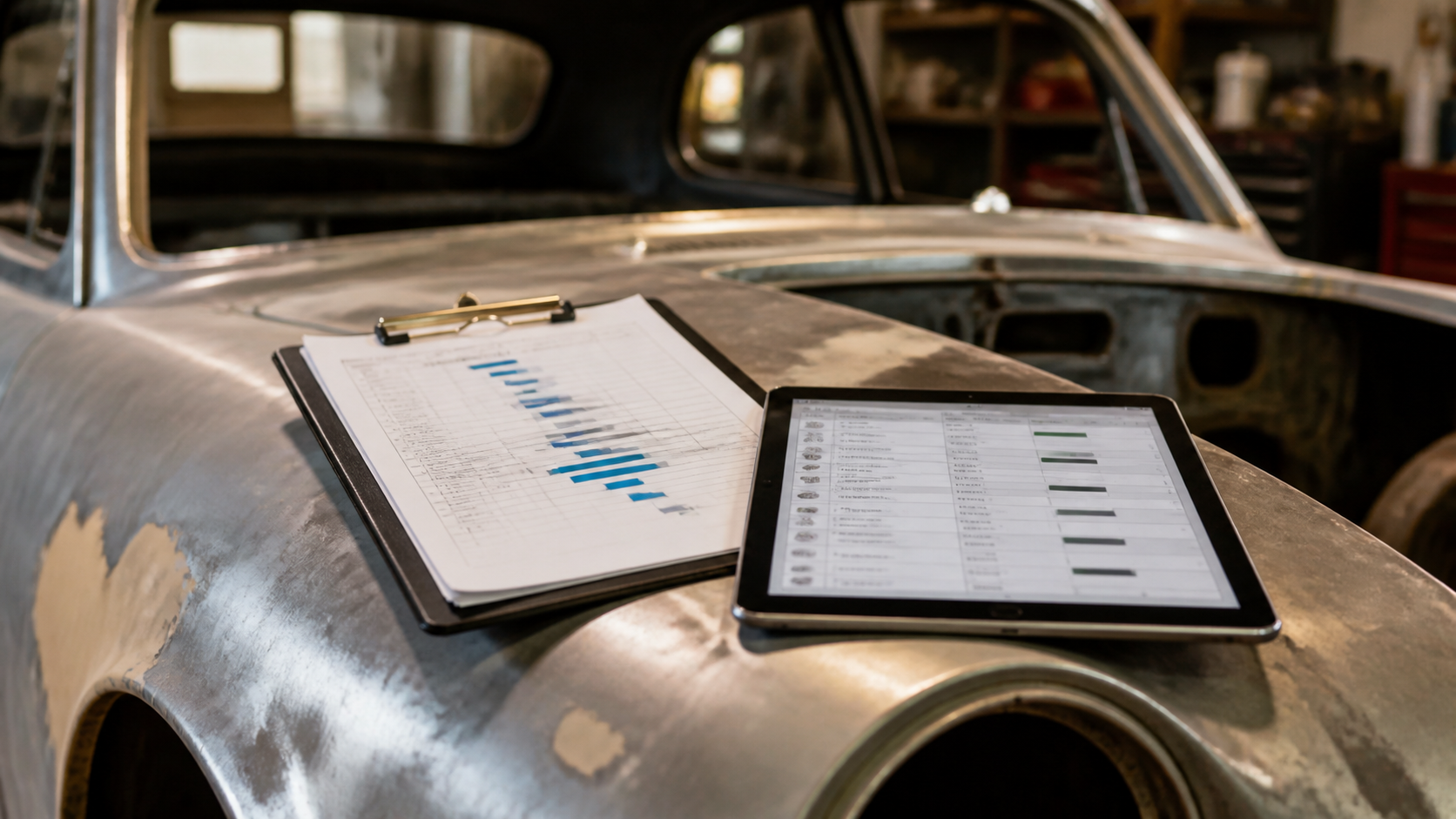
Classic car restorations are inherently complex projects that frequently span months or even years. At any given time, a shop may have several vehicles in various stages of disassembly, metalwork, paint, or final assembly. Documenting this work-in-progress (WIP) is a vital component of building a defensible record.
To provide transparency, owners should maintain rigorous documentation for every vehicle currently in the shop. This documentation includes signed scopes of work that detail the exact services requested by the client, the estimated timeline, and the agreed-upon billing structure. Additionally, owners must record all deposits received, parts ordered specifically for the project, and hours billed versus hours estimated. A clear WIP schedule should outline the percentage of completion for each active restoration.
Reviewers examine WIP records to understand the status of ongoing commitments and the allocation of shop resources. Tell owners to document signed scopes, deposits, WIP, owner-specific adjustments, and transfer assumptions so a reviewer can assess them. Clear WIP documentation allows a reviewer to evaluate the transition of active projects, the liability associated with unearned deposits, and the remaining scope of work required to bring each classic car to completion. This level of detail helps clarify the operational obligations that exist at the time of review.
Structuring Supplier and Vendor Documentation
The ability to source high-quality, period-correct components is a fundamental requirement for any restoration shop. Establishing relationships with specialized vendors—ranging from new-old-stock (NOS) parts dealers to custom upholstery fabricators and specialized machine shops—often takes years of industry experience. Documenting these relationships ensures that the shop’s supply chain is clearly understood.
A structured vendor record should list all primary suppliers, detailing the specific materials or services they provide, standard lead times, and established payment terms. If the shop relies on a particular vendor for hard-to-find vintage engine components or custom-matched lacquer paints, this relationship should be noted in the shop’s operational manual. Furthermore, documenting alternative suppliers for critical components can demonstrate operational resilience.
While compiling this information, owners should focus on organizing contact details, purchase histories, and ordering protocols. Providing a clear map of the shop’s supply network allows external reviewers to understand how materials are sourced and how vendor relationships support the shop’s daily operations. This organized approach to vendor management illustrates the structural foundation of the shop’s procurement process.
Normalizing Earnings and Financial Adjustments
Financial transparency is arguably the most critical aspect of a defensible record. Owner-operated businesses frequently blend personal and business expenses, making the raw tax returns difficult for an external reviewer to interpret accurately. To present a clear picture of the shop’s financial performance, owners must prepare detailed records of earnings normalization.
Normalization involves identifying and documenting owner-specific adjustments that do not reflect the standard operational costs of the business. Common examples in a restoration shop might include the cost of parts ordered for the owner’s personal classic car, travel expenses to enthusiast car shows that are primarily personal in nature, or family health insurance premiums paid through the business. Additionally, if the owner owns the real estate and pays the business a non-market rent, this discrepancy must be recorded.
Owners should thoroughly document these owner-specific adjustments and transfer assumptions so a reviewer can assess them. By providing a clear ledger of adjustments alongside the standard profit and loss statements, the owner enables reviewers to understand the baseline financial performance of the shop. As owners organize these financial adjustments, they often seek to understand how these figures fit into standard valuation methods for owners preparing to sell. Presenting normalized financials ensures that external parties can evaluate the shop’s economic model based on standardized operational metrics rather than individualized spending habits.
Standard Operating Procedures (SOPs) for Restoration Work
The specialized knowledge required to restore a classic automobile is often held entirely within the minds of the owner and a few key technicians. While this expertise is essential for delivering high-quality work, relying exclusively on unwritten knowledge creates operational ambiguity. Developing comprehensive Standard Operating Procedures (SOPs) is a practical step toward building a defensible record of how the shop functions.
SOPs should document the critical workflows that define the shop’s output. This documentation might include the step-by-step process for intake inspections, the protocol for stripping and cataloging original parts, standard techniques for metal fabrication and rust repair, and the quality assurance checklists used prior to final vehicle delivery. Even administrative tasks, such as how hours are tracked against specific projects and how client updates are communicated, should be clearly outlined.
Documenting these procedures provides a framework that reviewers can use to understand shop workflow and quality control mechanisms. Detailed SOPs illustrate that the business operates on structured, repeatable processes rather than ad-hoc decision-making. This operational clarity allows reviewers to assess the organizational maturity of the shop and understand how daily tasks are managed across the team.
Conclusion
Building a defensible valuation record is a meticulous process that requires classic car restoration shop owners to step back from the workshop floor and focus on business administration. By systematically cataloging specialized equipment, maintaining rigorous documentation of work-in-progress, structuring vendor relationships, normalizing financial earnings, and establishing clear standard operating procedures, owners can create a transparent account of their operations.
This disciplined approach to documentation ensures that external reviewers can accurately assess the shop’s organizational structure, financial health, and operational workflows. Ultimately, maintaining these detailed records allows the shop to operate with greater clarity and provides a solid foundation for evaluating the business’s standing in the industry.


0 Comments