
Preparing a classic car for a seasonal outing, a club meet, or a long drive is part of the pleasure of ownership. It is also a moment to slow down and check more than oil, tire pressure, and battery charge. Older cars move through many owners, restorations, storage periods, parts swaps, and state registrations, so recall notices and service records can be harder to trace than they are for a late-model daily driver.
For vintage auto club participants planning seasonal auto club activities, a repeatable recall-check routine is a practical pre-drive habit. It helps owners confirm the vehicle identity, review official sources, and decide what needs a dealer, manufacturer, or specialist follow-up before the car joins traffic.
Why Classic Cars Need A Different Recall Routine
Modern vehicles are usually tied to active owner portals, dealer networks, and standardized 17-character VIN lookups. Classic and collector vehicles are different. A 1960s coupe, a restored truck, or a modified import may have older serial-number formats, replacement parts, or incomplete ownership records. A basic VIN search can still be useful, but it should not be the only step.
Restoration work also changes the recall picture. A car may carry aftermarket wheels, replacement brakes, new seat belts, an upgraded fuel system, or a replacement steering component. Those parts may have their own model numbers and manufacturers. A clean vehicle-level search does not automatically cover every component added after the car left the factory.
The goal is not to create panic or treat every older vehicle as unsafe. The goal is to build a calm checklist that can be repeated before a first spring drive, a purchase inspection, a long club outing, or a sale.
What To Collect Before Searching
Gather the details before opening search tools. This keeps the process focused and reduces the chance of chasing the wrong model or component.
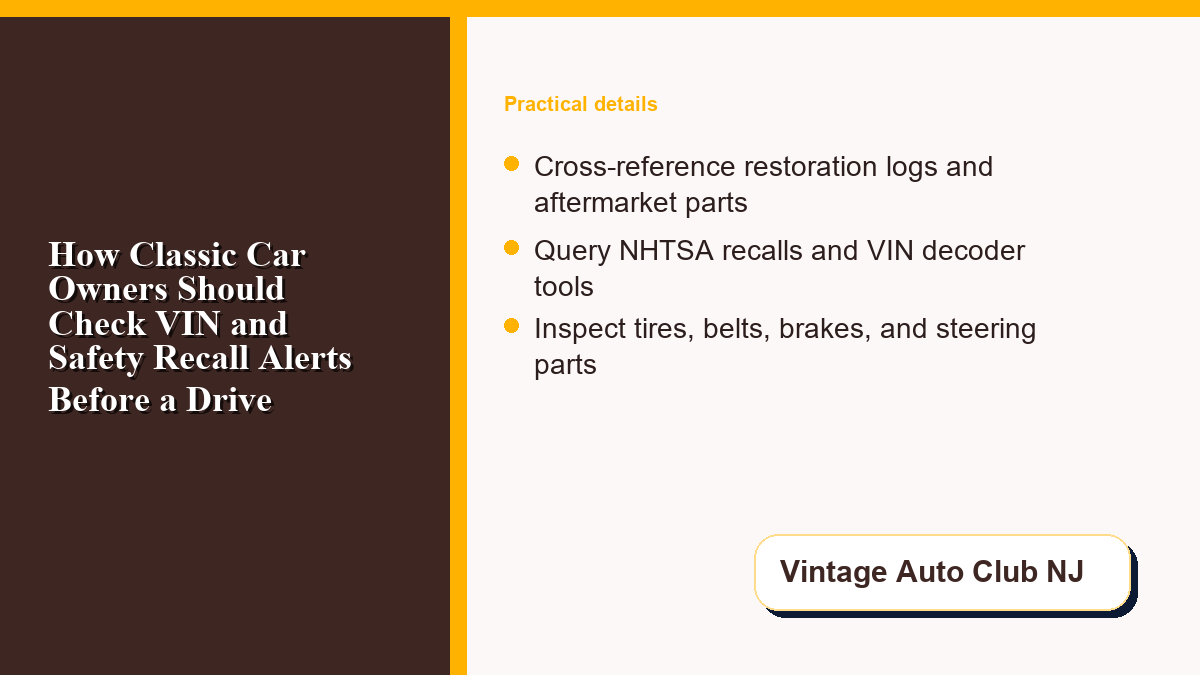
- VIN or serial number: Check the windshield plate, doorjamb label, firewall, frame rail, title, registration, and insurance card.
- Model year, make, model, and trim: These help when an older serial number is not accepted by a modern lookup tool.
- Restoration records: Keep invoices and notes for brake, steering, fuel, electrical, wheel, tire, and seat-belt work.
- Component labels: Photograph part numbers, manufacturer names, date codes, and serial numbers on major replacement parts.
- Owner history: Previous registrations, sale documents, and service files can reveal where the vehicle was maintained.
How To Handle Older VINs And Serial Numbers
Vehicles built for the 1981 model year and later generally use the standardized 17-character VIN format. That format works better with automated databases and VIN decoders. Earlier vehicles may use shorter serial numbers that vary by manufacturer and body style. Some are stamped on the firewall, some on the frame, some on a door pillar, and some appear in more than one location.
If a pre-1981 serial number returns an error, do not treat that as proof that no safety issue exists. Search by year, make, and model when the official tool allows it. Then compare the result with manufacturer records, dealer service departments, reputable marque clubs, and restoration paperwork. For imported, kit, rebuilt, or heavily modified vehicles, also check the safety-critical components one by one.
Start With Official Vehicle Sources
For U.S. vehicle recall research, start with the National Highway Traffic Safety Administration. The NHTSA Recalls Database lets owners search by VIN, license plate, or vehicle information, depending on the query. The NHTSA VIN Decoder can help confirm standardized VIN details. NHTSA also maintains vehicle safety resources for tires, child seats, equipment, and broader vehicle-safety topics.
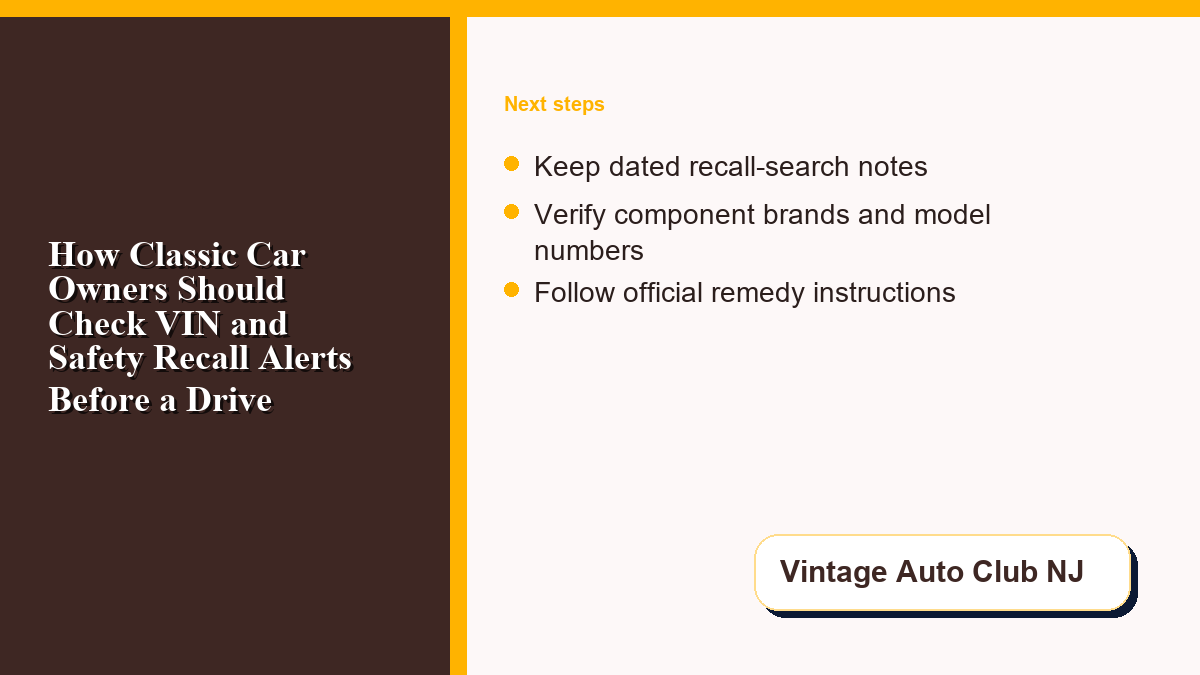
After checking official sources, compare what you find against manufacturer or dealer records. If the car has aftermarket brakes, wheels, belts, tires, or electrical components, search those manufacturers separately. Keep a simple dated note of where you checked and what you found, especially if the car is being prepared for sale or a long trip.
Third-party discovery tools can help organize follow-up searches once official sources are part of the routine. A VIN recall check on Recall Tracker can help owners monitor vehicle recall information and revisit recent alerts without relying on memory alone. Treat it as a discovery aid; official agency and manufacturer instructions still control the remedy.
Keep A Dated Recall Log
A simple recall log is especially helpful for classic cars because the vehicle’s story may be spread across paper folders, old titles, restoration invoices, and previous-owner notes. Create one page for the car and record the date, source checked, search term used, and result. If you searched by VIN, write down the full VIN or the serial number format you used. If you searched by year, make, and model, note that too.
Add a section for parts that are not original to the vehicle. Tires, seat belts, brake kits, steering parts, fuel-system components, wheels, and electrical upgrades can all have separate labels or model numbers. Photograph those labels and keep the images with the log. That gives a future owner, shop, or club safety chair a cleaner starting point if a question comes up later.
The log does not need to be fancy. A printed checklist in the glove box or a shared maintenance spreadsheet is enough. What matters is that the next check starts from evidence instead of memory.
For club events, consider making this part of the same preparation rhythm as checking tire age, brake feel, lights, registration, and emergency tools. That keeps the recall step familiar instead of treating it like a separate research project every time the car leaves the garage.
A Classic-Car Recall Check Before A Drive
| Step | What To Check | Where To Verify |
|---|---|---|
| Vehicle identity | VIN or serial number against title and registration | Windshield, doorjamb, firewall, frame, title |
| Official recall search | Vehicle year/make/model or standardized VIN | NHTSA recalls and manufacturer records |
| Replacement parts | Brakes, steering, fuel, wheels, belts, tires | Invoices, labels, manufacturer bulletins |
| Storage return | Tires, fluids, wiring, seals, rodent damage | Maintenance inspection and service notes |
| Trip readiness | Open issues before a club drive or sale | Dated checklist and repair follow-up |
Sharing this habit through classic car blogs to follow or local events helps normalize careful recordkeeping. It also gives buyers and club members a clearer way to discuss safety without turning every conversation into guesswork.
Common Pitfalls To Avoid
Avoid relying only on seller statements. A car described as fully sorted may still have missing paperwork, unknown parts, or an old recall record that nobody checked.
Avoid treating forum threads as official instructions. Discussions on vintage car forums can be useful for context, but recall remedies should be confirmed with official agency, manufacturer, dealer, or component-maker sources.
Avoid assuming that an empty search means the car is risk-free. Older vehicles may have nonstandard identifiers, missing records, or replacement components outside the original vehicle record.
Avoid do-it-yourself recall fixes unless the official notice clearly allows it. If a component is recalled, follow the remedy instructions from the manufacturer or regulating agency.
Frequently Asked Questions
Should I trust a seller who says a classic car has no recalls?
Treat the claim as a starting point, not proof. Ask for the VIN or serial number, model details, and receipts for major components. Then check official sources yourself.
Why does my older serial number fail in online tools?
Many recall and VIN tools are built around standardized 17-character VINs. If your car predates that format, search by year, make, and model where possible, then use manufacturer, dealer, or specialist records.
Do aftermarket parts appear in a vehicle VIN search?
Usually not. A vehicle-level search may miss replacement wheels, belts, brakes, fuel-system parts, tires, or electrical components added during restoration. Check those parts by brand and model number.
Does Recall Tracker replace official recall instructions?
No. Recall Tracker can help with discovery and monitoring, but official agency and manufacturer notices control the remedy, repair procedure, and eligibility details.
What if the manufacturer no longer exists?
Keep the official search results, then consult a qualified restoration shop, dealer successor, component manufacturer, marque club, or trusted parts specialist. Do not continue driving with a known unresolved safety defect.


0 Comments